
NEVER FORSAKEN
TODAY'S SCRIPTURE
“Jesus cried out in a loud voice, . . . “My God, my God, why have you forsaken me?””
Matthew 27:46

TODAY'S WORD
Russian writer Fyodor Dostoyevsky said, “The degree of civilization in a society can be judged by entering its prisons.” With that in mind, I read an online article describing “The Top 8 Deadliest Prisons in the World.” In one of these prisons every prisoner is held in solitary confinement.
We are intended to live and relate in relationships and community, not in isolation. This is what makes solitary confinement such a harsh punishment.
We are intended to live and relate in relationships and community.
Isolation is the agony Christ suffered when His eternal relationship with the Father was broken on the cross. We hear this in His cry captured in Matthew 27:46: “About three in the afternoon Jesus cried out in a loud voice, ‘Eli, Eli, lema sabachthani?’ (which means, ‘My God, my God, why have you forsaken me?’).” As He suffered and died under the burden of our sins, Christ was suddenly alone, forsaken, isolated, cut off from His relationship with the Father. Yet His suffering in isolation secured for us the promise of the Father: “Never will I leave you; never will I forsake you” (Heb. 13:5).
Christ endured the agony and abandonment of the cross for us so that we would never be alone or abandoned by our God. Ever.
TODAY'S PRAYER
Father, thank You for making it possible for me to be Your child. I will be eternally grateful for the price Jesus paid to make that relationship possible. Thank You for the promise that You will never abandon me.
Credit: odb.org
THREE-WORD OBITUARY
TODAY'S SCRIPTURE
“Christ Jesus who died—more than that, who was raised to life—is at the right hand of God.”
Romans 8:34
TODAY'S WORD
Before Stig Kernell died, he told the local funeral home that he didn’t want a traditional obituary. Instead, the Swedish man instructed them to publish only three words noting his passing: “I am dead.” When Mr. Kernell died at age 92, that’s exactly what appeared. The audacity and simplicity of his unusual death notice captured the attention of newspapers around the world. In a strange twist, the international curiosity about the man with the three-word obituary caused more attention to his death than he intended.
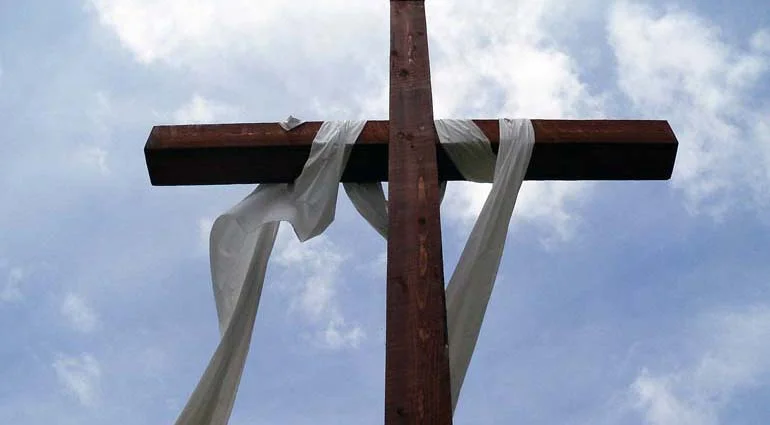
When Jesus was crucified, the Lord’s obituary could have read, “He is dead.” But after 3 days, it would have been changed to front-page news saying, “He is risen!” Much of the New Testament is devoted to proclaiming and explaining the results of Christ’s resurrection. “Christ Jesus who died—more than that, who was raised to life—is at the right hand of God and is also interceding for us. Who shall separate us from the love of Christ? . . . We are more than conquerors through him who loved us” (Rom. 8:34-37).
He is risen! He is risen indeed!
The three-word obituary of Jesus, “He is dead,” has been transformed into an eternal anthem of praise to our Savior. He is risen! He is risen indeed!
TODAY'S PRAYER
Lord, we rejoice in Your great victory over sin and death through Your resurrection. May we live in light of it every day.
Credit: odb.org
THE OLIVE PRESS
TODAY'S SCRIPTURE
“They went to a place called Gethsemane.”
Mark 14:32
TODAY'S WORD
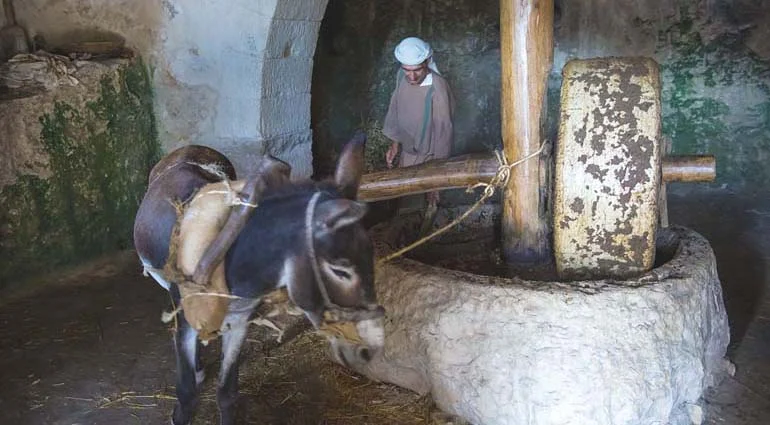
If you visit the village of Capernaum beside the Sea of Galilee, you will find an exhibit of ancient olive presses. Formed from basalt rock, the olive press consists of two parts: a base and a grinding wheel. The base is large, round, and has a trough carved out of it. The olives were placed in this trough, and then the wheel, also made from heavy stone, was rolled over the olives to extract the oil.
On the night before His death, Jesus went to the Mount of Olives overlooking the city of Jerusalem. There, in the garden called Gethsemane, He prayed to the Father, knowing what lay ahead of Him.
By His wounds we are healed.
The word Gethsemane means “place of the olive press”—and that perfectly describes those first crushing hours of Christ’s suffering on our behalf. There, “in anguish, he prayed . . . and his sweat was like drops of blood falling to the ground” (Luke 22:44).
Jesus the Son suffered and died to take away “the sin of the world” (John 1:29) and restore our broken relationship with God the Father. “Surely he took up our pain and bore our suffering . . . . He was pierced for our transgressions, he was crushed for our iniquities, the punishment that brought us peace was on him, and by his wounds we are healed” (Isa. 53:4-5).
Our hearts cry out in worship and gratitude.
TODAY'S PRAYER
Father, help me understand what Your Son endured for me. Help me appreciate the depths of love that would allow my Lord and Christ to be crushed for my wrongs and my rescue.
Credit: odb.org
STORIES IN A CABIN
TODAY'S SCRIPTURE
“[Christ] went through the greater and more perfect tabernacle that is not made with human hands.”
Hebrews 9:11

TODAY'S WORD
The vintage cabin, expertly constructed from hand-hewn logs, was worthy of a magazine cover. But the structure itself was only half the treasure. Inside, family heirlooms clung to the walls, infusing the home with memories. On the table sat a hand-woven egg basket, an ancient biscuit board, and an oil lamp. A weathered pork pie hat perched over the front door. “There’s a story behind everything,” the proud owner said.
When God gave Moses instructions for constructing the tabernacle, there was a “story” behind everything (Ex. 25–27). The tabernacle had only one entrance, just as we have only one way to God (see Acts 4:12). The thick inner curtain separated the people from the Most Holy Place where God’s presence dwelt: Our sin separates us from God. Inside the Most Holy Place was the ark of the covenant, which symbolized God’s presence. The high priest was a forerunner of the greater Priest to come—Jesus Himself. The blood of the sacrifices foreshadowed Christ’s perfect sacrifice: “He entered the Most Holy Place once for all by his own blood, thus obtaining eternal redemption” (Heb. 9:12).
All these things told the story of Christ and the work He would accomplish on our behalf. He did it so that “those who are called may receive the promised eternal inheritance” (v. 15). Jesus invites us to be a part of His story.
Credit: odb.org
THE BEST IS YET TO COME
TODAY'S SCRIPTURE
“Set your minds on things above, not on earthly things.”
Colossians 3:2

TODAY'S WORD
In our family, March means more than the end of winter. It means that the college basketball extravaganza called “March Madness” has arrived. As avid fans, we watch the tournament and enthusiastically root for our favorite teams. If we tune in early we get a chance to listen to the broadcasters talk about the upcoming game and to enjoy some of the pre-game drills where players shoot practice shots and warm up with teammates.
Our life on earth is like the pre-game in basketball. Life is interesting and full of promise, but it doesn’t compare to what lies ahead. Just think of the pleasure of knowing that even when life is good, the best is yet to come! Or that when we give cheerfully to those in need, it’s an investment in heavenly treasure. In times of suffering and sorrow, we can find hope as we reflect on the truth that a pain-free, tearless eternity awaits us. It’s no wonder that Paul exhorts: “Set your minds on things above” (Col. 3:2).
The future God has promised us enables us to see all of life in new dimensions. While this may be a great life, the best life is still to come. It is a wonderful privilege to live here in the light of there.
Credit: odb.org